

Is Color Night Vision Better Than Infrared?
When choosing an outdoor security camera, night vision is one of the most important features to consider. But is color night vision better than infrared (IR) night vision?
The answer depends on your security needs, lighting conditions, and monitoring environment. Color night vision helps you capture important details such as clothing and vehicle colors, while infrared night vision provides black-and-white footage in low-light or completely dark conditions without visible white-light illumination.
Neither technology is universally better. Understanding how each works can help you choose the right night vision security camera for your home or property.
What Is Color Night Vision?
Color night vision allows a security camera to capture full-color footage in low-light conditions. Depending on the camera, it may use a highly light-sensitive image sensor, available ambient light, or a built-in white spotlight to illuminate the scene.
Unlike traditional black-and-white infrared footage, color night vision preserves color information that may help you identify people, vehicles, and other objects.
Benefits of Color Night Vision
1. Capture More Identifying Details
Color footage can reveal details that are difficult to distinguish in monochrome recordings, such as the color of a person's jacket, a vehicle's paint, or an object left near your entrance. These details may be useful when reviewing a security event.
2. Get More Natural-Looking Nighttime Footage
Color night vision produces images that resemble what you see during the day, making recorded events easier to interpret at a glance.
3. Improve Visibility in Well-Lit Areas
Color night vision can work particularly well in driveways, front porches, garages, and entrances where streetlights, porch lights, or other light sources provide sufficient illumination.
Limitations of Color Night Vision
Color night vision also has trade-offs.
- Lighting requirements: Cameras that rely on ambient light may struggle to produce clear color footage in complete darkness.
- Visible illumination: Models that use white spotlights can illuminate the scene, but the light may attract attention or disturb nearby people.
- Power consumption: Activating a spotlight can increase power consumption, which is an important consideration for battery-powered and solar-powered security cameras.
Some cameras combine color night vision with motion-activated white lights, allowing them to capture color footage when activity is detected instead of keeping the lights on all night.
What Is Infrared (IR) Night Vision?
Infrared night vision uses infrared LEDs to illuminate an area with light that is generally invisible to the human eye. The camera's image sensor detects the reflected infrared light and produces black-and-white footage.
Because infrared illumination does not require visible white light, IR night vision is a practical option for monitoring dark areas without lighting up the surroundings.
Benefits of Infrared Night Vision
1. See in Complete Darkness
Infrared night vision can capture footage even when there is little or no visible ambient light, provided the camera's infrared illuminators cover the area.
2. Monitor Areas Discreetly
IR illumination does not create the bright white light associated with a spotlight. This makes it useful for monitoring side yards, backyards, and other areas where visible lighting is undesirable.
3. Support Continuous Nighttime Monitoring
Infrared night vision can be useful when you want to monitor an area throughout the night without continuously activating a white spotlight. Actual battery life and recording duration still depend on the camera's power system and settings.
Limitations of Infrared Night Vision
- No true color information: IR footage is monochrome, so you cannot reliably determine the actual color of clothing, vehicles, or other objects.
- Image quality depends on illumination: Objects beyond the effective IR range may appear dark or lack detail.
- Potential glare and reflection: Rain, fog, dust, nearby surfaces, glass, and spiderwebs can affect infrared image quality in certain conditions.
Infrared night vision is therefore well suited to nighttime detection and monitoring, but it may provide less identifying information when color is important.
Color Night Vision vs. Infrared Night Vision: Key Differences
The following table summarizes the main differences between the two technologies.
| Feature | Color Night Vision | Infrared (IR) Night Vision |
|---|---|---|
| Image output | Full-color footage | Black-and-white footage |
| Identifying clothing and vehicle colors | Yes, when image quality is sufficient | No |
| Performance in complete darkness | Requires suitable low-light sensitivity or visible-light illumination | Works with effective IR illumination |
| Visible light | May use a white spotlight | Generally no visible white-light illumination |
| Discreet monitoring | Depends on whether visible lighting is activated | Usually more discreet |
| Power use | May increase when white lights are activated | Depends on IR hardware and operating mode |
| Best suited for | Entrances, driveways, and areas where color details matter | Dark yards, side paths, and areas where visible lighting is undesirable |
Important: Neither technology guarantees better image quality or a longer viewing distance. Actual performance depends on the image sensor, lens, illumination power, installation conditions, and the camera's specifications.
Can a Security Camera Have Both Color and Infrared Night Vision?
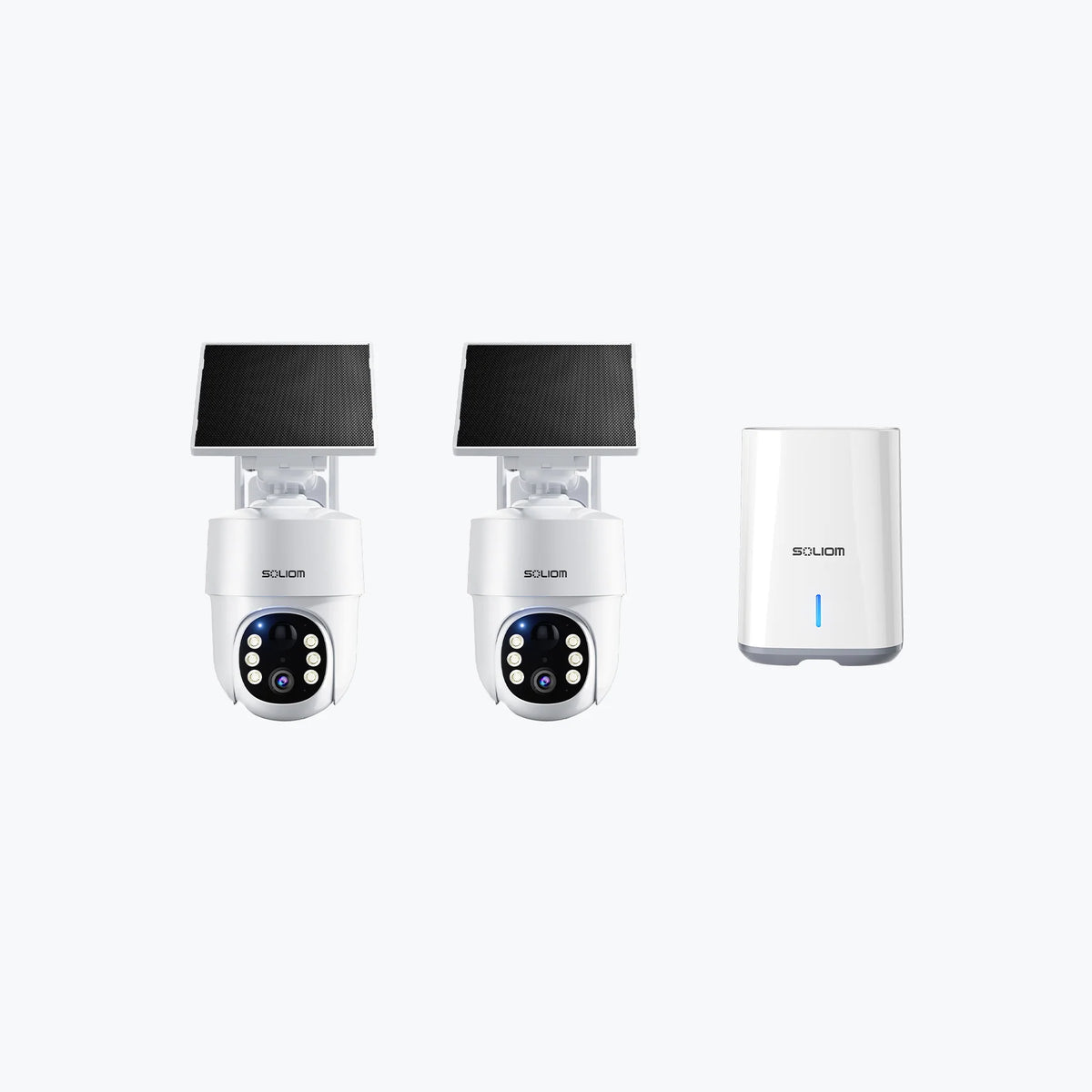
Yes. Some SOLIOM security cameras support both color night vision and infrared black-and-white night vision, allowing you to choose the mode that best suits your surroundings and security needs. For example, the SHB501 3K and SHB801 4K solar security camera systems offer multiple night vision modes, giving you flexibility in different lighting conditions.
One Camera, Two Night Vision Options
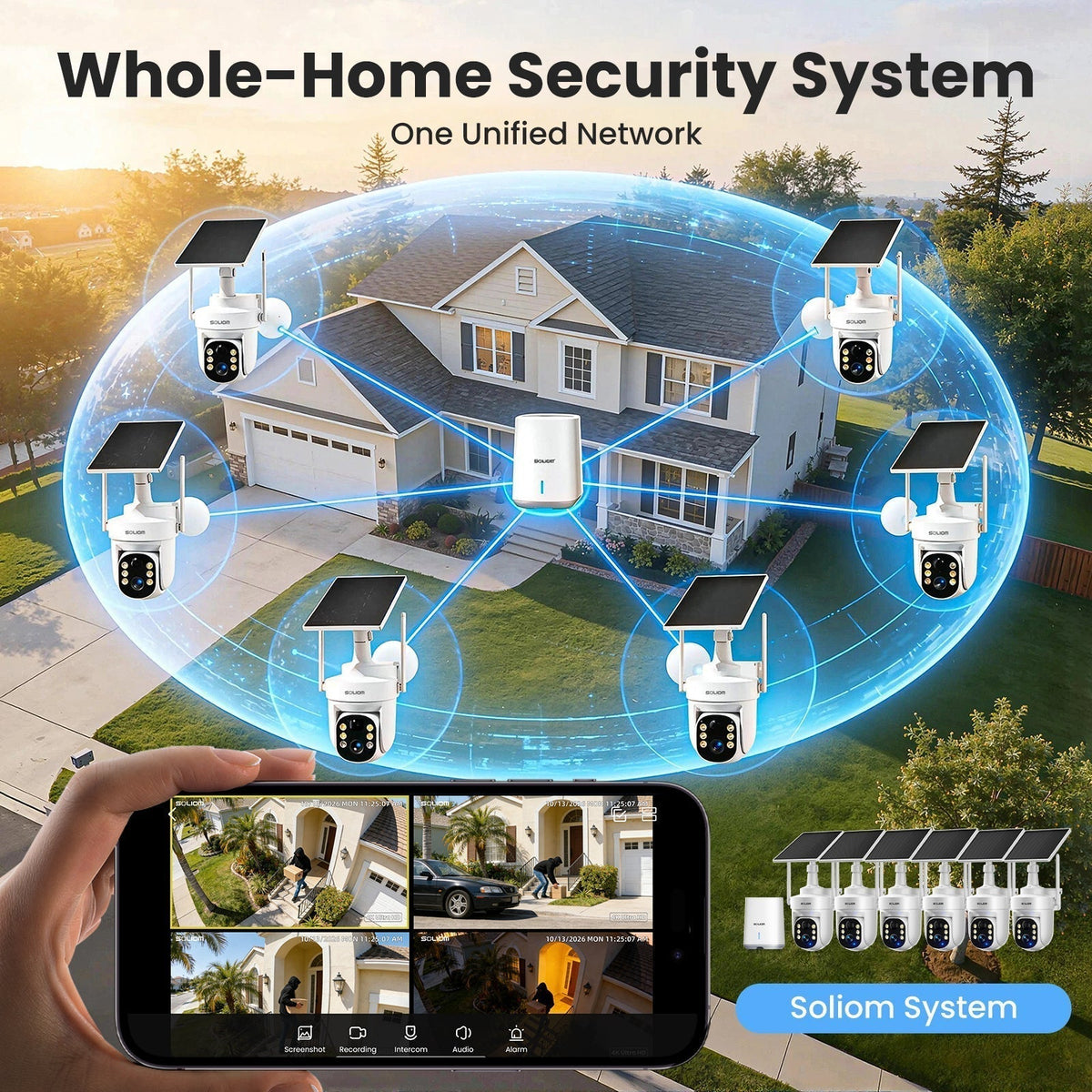
You don’t always have to choose between color night vision and infrared night vision. SOLIOM SHB501 3K and SHB801 4K solar security camera systems offer flexible night vision modes, allowing you to choose full-color footage, color recording when motion is detected, or black-and-white infrared footage based on your surroundings and security needs.
- Explore SHB501 3K Solar Security Camera System: Enjoy 5MP (3K) video, intelligent human tracking, and customizable night vision modes for everyday home security.
- Explore SHB801 4K Solar Security Camera System: Get 8MP (4K) detail, intelligent human tracking, and flexible night vision modes to help capture important details after dark.
Frequently Asked Questions
Is color night vision clearer than infrared?
Not always. Color night vision can provide more identifying information, particularly when clothing or vehicle colors matter. Infrared night vision can produce useful black-and-white footage in complete darkness. Actual clarity depends on the camera's sensor, lens, illumination, and viewing conditions.
Does infrared night vision work in complete darkness?
Yes, provided the camera has effective infrared illumination and the monitored area is within its usable range. Without sufficient illumination, the image may be too dark to show useful detail.
Does color night vision require a spotlight?
Not necessarily. Some cameras use highly light-sensitive sensors to capture color in low-light environments. Other models use a built-in white spotlight or floodlight to provide the visible light needed for color footage.
Which night vision is better for outdoor security cameras?
Color night vision is useful when identifying colors is important, while infrared night vision is useful for discreet monitoring in dark areas. For outdoor security, choose based on the location, lighting conditions, and the type of details you need to capture.


Leave a comment
This site is protected by hCaptcha and the hCaptcha Privacy Policy and Terms of Service apply.